
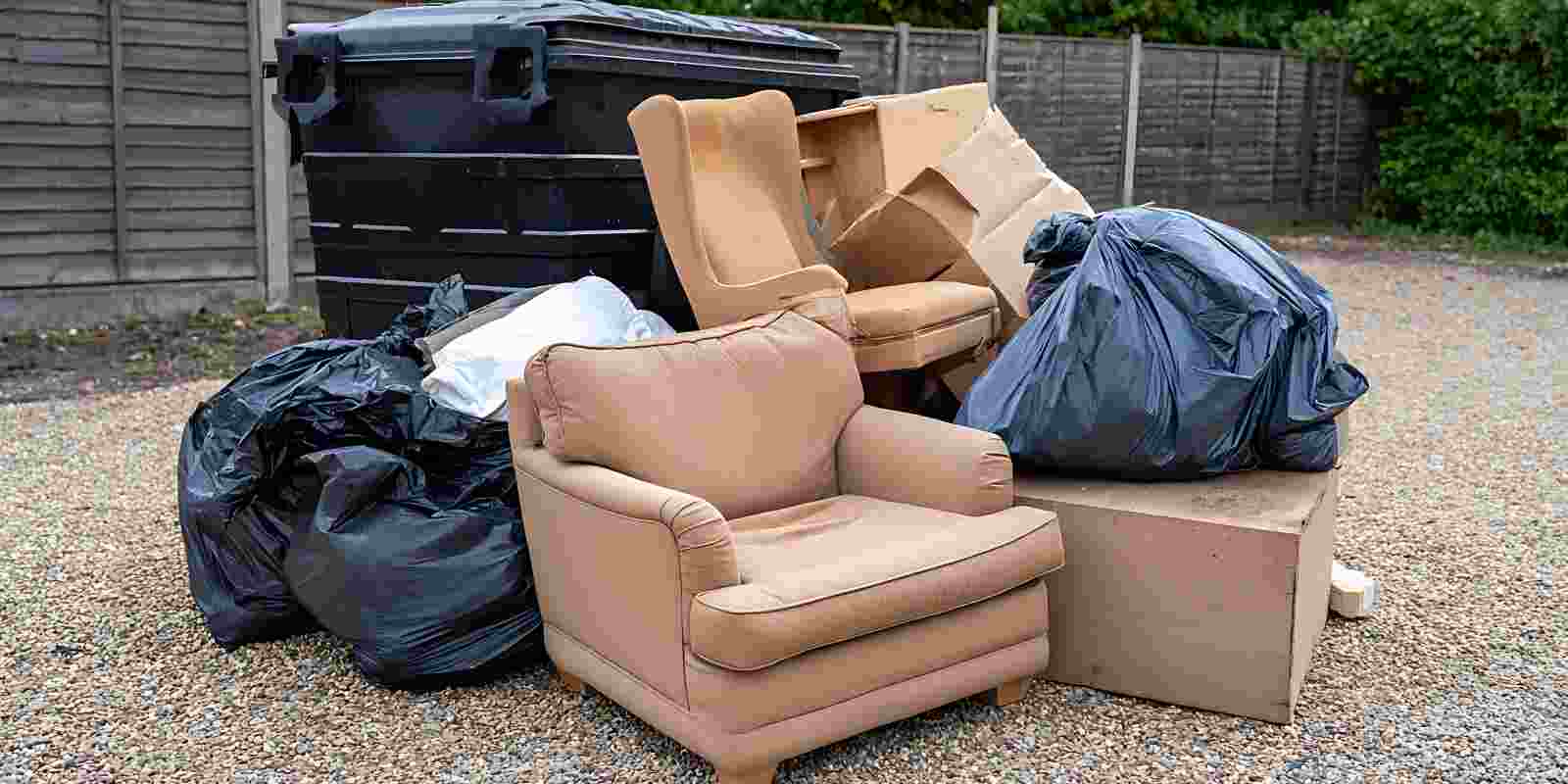
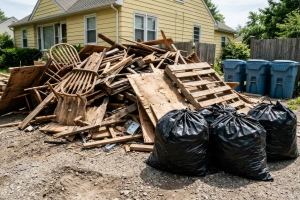
A pile of branches, brush, and bagged clippings left over from a weekend landscaping job or a storm cleanup often falls outside what the county will collect. Most homeowners staring at that pile want a sense of what hauling away yard waste should cost before they call anyone for removal.
Once a hauler gets involved, the job is priced by how much truck space your yard work pile fills rather than by the bag or by the pound.
Why the County Will Not Take Yard Waste
Curbside yard waste pickup works fine for a weekend’s worth of trimmings, but anything larger runs up against limits fast.
Ten compostable bags or containers a week is Fairfax’s ceiling per household. Anything bundled has to clear its own set of numbers too. It can’t be more than 50 pounds, 4 feet in length, and 6 inches around. Push past four bundles in a single week, and the county reroutes the job to a special pickup.
Montgomery County runs a similar weekly limit. The county caps bags and bundles at 45 pounds each and rejects anything set out in plastic.
The District of Columbia collects by appointment only, up to 20 paper bags at a time, with bundled branches limited to 4-foot lengths.
None of the three programs will take stumps, root balls, or fence lumber. Once a pile crosses those lines, a private hauler becomes the only option, and pricing shifts from bag count to load size.
Timing works against homeowners, too. Between December 25 and the last day of February, Fairfax’s yard waste recycling program shuts down entirely, right when a good chunk of winter pruning and yard cleanup tends to happen. Trim anything in that window, and it goes out with the regular trash instead.
Pricing by Load Size
This table breaks down four truck load sizes and the kind of yard work that typically produces each one.
| Load Size | What It Looks Like | Common Jobs |
| Quarter load | Roughly one pickup truck bed | A weekend of pruning or bagged leaves |
| Half load | About two pickup beds | Hedge removal or one small tree taken down |
| Three-quarter load | Most of a large truck | Storm cleanup across a full yard |
| Full load | An entire large truck | Overgrown lot clearing or a full-yard teardown |
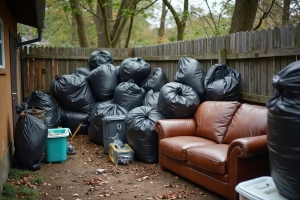
A pile that looks large in a yard can often be compressed to a quarter load once it is actually loaded. Branches and brush settle and interlock in the truck bed in ways bagged leaves do not.
Brush removal cost tends to run higher than the same volume of bagged leaves for exactly that reason, since branches take longer to cut down and load. A full yard teardown that pulls out old shrubs and root systems along with the brush can top out at a full load on its own.
Why Location Changes the Number on the Quote
Tipping fees at composting and transfer facilities are not the same across Virginia, Maryland, and the District. Fairfax County charges $88 per ton for yard waste dropped at its transfer stations, a rate the county sets and adjusts most years.
Montgomery County runs its own fee schedule at the Shady Grove Processing Facility, and the District’s Fort Totten Transfer Station operates under D.C.’s own rates. A hauler working across all three jurisdictions passes those differences along, which is part of why yard waste removal cost estimates vary even for similar-sized piles.
Dense city blocks with narrow alleys and permit-only parking can slow a pickup crew down in ways a suburban driveway never does. A truck that has to circle for parking or squeeze through a one-way alley adds labor time that a pile sitting curbside on a wide driveway does not. Northern Virginia yard waste removal jobs typically cost less than a same-size pile pulled from a rowhouse block in the District.
Size is not the only variable. Getting to the pile matters just as much. Curbside stacks disappear in minutes, but the same load behind a locked gate or tucked down a narrow side yard eats up extra time, and that time lands on the invoice.
This is why storm debris cleanup cost estimates usually sit toward the top of a load size range. Wind knocks limbs down everywhere at once, not into one tidy pile.
Where Yard Waste Ends and Construction Debris Begins
Branches, brush, leaves, sod, and mulch fall under standard yard waste pricing. Soil, rock, and concrete price differently, since those materials weigh far more per cubic foot and often require separate disposal handling.
None of that material, treated lumber, torn-down fencing, an old shed taken apart in the yard, can pass through a composting facility, so it gets classified and priced as construction debris instead. That distinction changes both the price and where the load ends up.
Sizing Your Pile Before You Call

Stacking everything in one spot before calling lets a crew quote the job from a photo instead of guessing on arrival. Spread that same material across the front yard, the side yard, and the curb, and it reads like a much bigger job than if it were stacked in one spot.
An estimate should already account for labor, fuel, and disposal from that first phone call, none of it added after the truck is loaded. A number that climbs once the crew arrives, with the pile unchanged, is a quote worth questioning.
Send a Photo and Get a Flat Yard Waste Removal Cost from 123JUNK Today
123JUNK’s residential junk removal team usually only needs a handful of photos to size up a pile and pin down the load before any truck rolls out. Material that can be composted or reused gets routed through the Donate, Recycle, Dispose process, and the flat rate wraps in labor, fuel, and disposal with no add-ons waiting at the end.
Schedule a pickup online or contact the team with photos of the pile for a flat yard waste removal cost.
