
Sorting through a home while preparing for a move, renovation, or large decluttering effort can quickly become an overwhelming task.
Junk removal in Fairfax County doesn’t have to mean sending everything you’re getting rid of straight to the landfill. In fact, Fairfax County offers structured donation and recycling programs that help make responsible removal possible for residents.
| In This Article: Today’s guide walks you through exactly where items can go in Fairfax County, what local facilities accept, and how to simplify the entire process while maximizing donations. |
Start With Donation Before Disposal Every Time
The U.S. Environmental Protection Agency ranks reuse above recycling and disposal in its waste hierarchy, and Fairfax County echoes that guidance in its public materials. Any usable goods should stay in circulation whenever possible.
If you’re wondering where to donate household items in Northern Virginia, focus on two main categories: drop-off donations and pickup services for larger items.
Drop Off Donations for Clothing and Household Goods
Goodwill locations across Northern Virginia publish detailed lists of what they accept and what they cannot take.
Items such as clothing, shoes, housewares, books, small electronics, and décor are typically accepted if they’re clean and in excellent condition. Certain baby items, such as car seats and cribs, are often declined because they do not meet modern safety standards.
Checking their acceptance lists before loading your car and heading to Goodwill prevents any potential frustration and wasted trips.
Schedule Pickup for Larger Usable Items
Habitat for Humanity ReStore locations serving the D.C. and Northern Virginia region often accept furniture, appliances, building materials, and tools.
Many locations offer free pickup for large, usable items. The Salvation Army also provides donation pickup scheduling in many area ZIP codes.
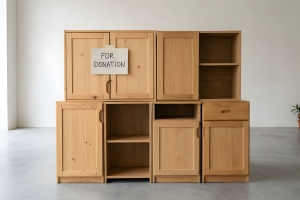
If you’re looking to donate furniture in Fairfax County, these pickup services can save time while keeping usable couches, dining sets, and appliances in circulation.
Use Fairfax County Recycling and Drop-Off Programs for Special Items
Fairfax County provides residents with access to two main disposal facilities, the I-66 Transfer Station in Fairfax and the I-95 Landfill Complex in Lorton. Proof of residency is typically required for trash disposal, and hours vary depending on the material you’re dropping off.
Most Fairfax households use private haulers rather than county curbside pickup, which is why relying on “bulk pickup” advice often leads to confusion. The drop-off programs are open to all residents and are generally the most consistent option.
Electronics Recycling and Data Awareness
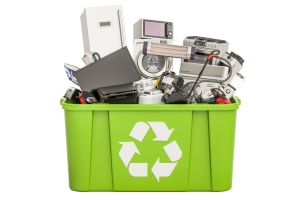
Electronics, including TVs, monitors, computers, phones, and cords, can be dropped off at designated e-cycling stations at both facilities.
Fairfax County guidance notes that the county is not responsible for the data security of electronics left at the curb for pickup, a point that many homeowners overlook during cleanouts. If you’re replacing old devices, make sure to secure personal data before transport and use official e-cycling stations.
Textile Recycling Even for Worn Items
Fairfax County runs textile recycling bins at disposal centers. Clothing, shoes, and household textiles can be recycled even if stained or worn. Items must be clean, dry, and bagged.
This particular option is ideal during large family decluttering projects where some items are no longer suitable for donation.
Book and Scrap Metal Recycling Programs
Hardcover and paperback books with ISBN barcodes can be placed in designated reuse bins at certain facilities. Scrap metal recycling is also available. Grills without propane tanks, metal shelving, and similar items can be separated for recycling.
If you’re handling appliance recycling in Fairfax, Va., both disposal centers accept white goods, but certain appliances containing refrigerants may incur specific fees. Because the county posts its fee schedules online and updates can occur, it’s smart to confirm the current rates before making a haul.
Household Hazardous Waste Should Never Go to the Curb
Household hazardous waste (HHW) requires special handling. Fairfax County provides free HHW disposal for residents, but any business-related waste is excluded.
Some common examples of HHW include paints, automotive fluids, pesticides, gasoline, batteries, and certain cleaners. Packing guidelines matter, so keep products in original containers, seal lids tightly, transport upright in cardboard boxes, and never mix materials.
Latex paint that is less than one-quarter full can be dried out and then placed in household trash. Larger quantities can be recycled at county facilities. Usable paint that is mostly full may even be eligible for donation through local programs connected with housing nonprofits.
Lithium batteries pose fire risks, so all terminals should be taped before drop-off. Tossing rechargeable batteries into standard recycling bins can create serious hazards for workers.
When Items Cannot Be Donated or Recycled
Some items are broken beyond reuse, may be unsafe, or are simply not accepted by donation centers. In those cases, homeowners have three main options:
- If you’re a county collection customer, you can schedule a special pickup, which is limited to five free collections per fiscal year.
- If you’re a private hauler customer, contact your specific hauler for bulk removal rules.
- If you’re dealing with a large cleanout or move, you should use professional junk removal in Fairfax County
Special pickup services apply only to county collection customers, and only about 10% of Fairfax residents fall into that category. Most families rely on private services or drop-off centers.
Making the Process Easier During a Major Cleanout

After helping many Fairfax County families through move-outs and estate cleanups, one pattern stands out: Sorting items into donation, recycling, and disposal categories early prevents potential decision fatigue later on. Setting up three zones in the garage or driveway speeds up loading and reduces second-guessing.
Professional decluttering services for families in Fairfax County often streamline this entire process on their behalf. Rather than coordinating multiple drop-offs, waiting in lines at the disposal center, and lifting heavy furniture, many homeowners prefer full-service help.
That’s where eco-friendly junk hauling in Fairfax County is valuable. A company aligned with donation-first practices can handle sorting, loading, recycling, and responsible disposal all in a single visit.
How 123JUNK Simplifies Responsible Removal
123JUNK follows a Donate, Recycle, Dispose approach that mirrors Fairfax County’s own waste priorities. Items that can serve another household are routed toward our donation partners, while recyclable materials are separated before final disposal. The process is transparent, and our pricing is volume-based and provided upfront.
If you’re preparing for a move, clearing out a basement, or downsizing after years in the same home, junk removal in Fairfax County doesn’t have to be stressful. Donation options exist, recycling programs are available, and professional help can bring everything together.
Ready to reclaim your space responsibly? Request a pickup from 123JUNK today and let your unwanted items find their next destination instead of the landfill.
